The Big City Plan and Our Future City: How Birmingham’s Plans Fit Together
Two non-statutory frameworks explain Birmingham’s development ambitions, with different geographical emphases and a separate role from the Local Plan.
Published
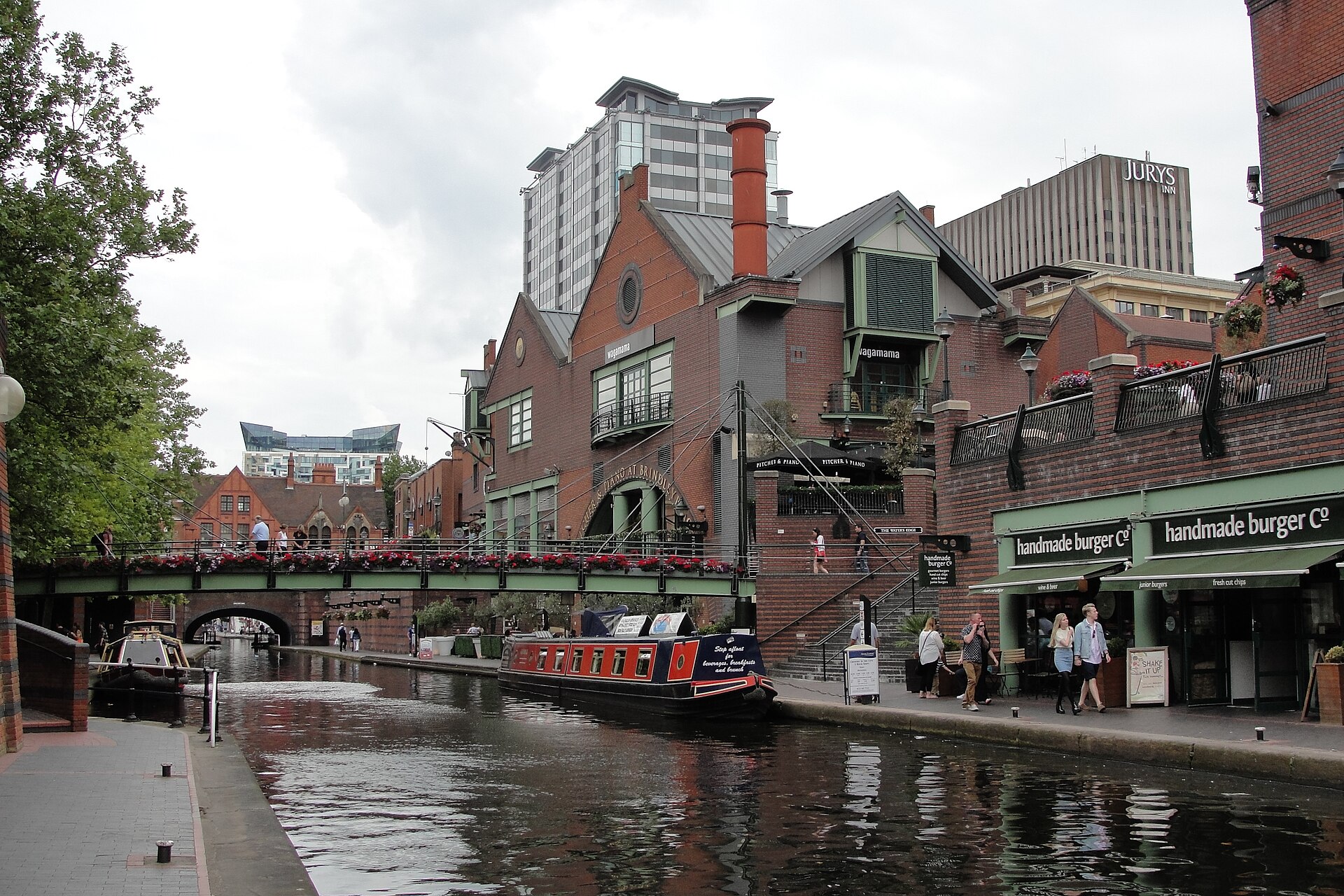

Birmingham’s Big City Plan and Our Future City describe ambitions for the city’s development, but understanding their scope matters before using either to assess a business location. Birmingham City Council describes the Big City Plan as a city centre masterplan. Our Future City: Central Birmingham Framework 2045 takes a wider geographical view and supports the Birmingham Local Plan review. Both are described as non-statutory planning documents.[1][2]
What the Big City Plan Sets Out
The Big City Plan is a 20-year masterplan intended to encourage and support the transformation of Birmingham city centre. Its subjects include new development, homes, public spaces, walking and cycling routes, heritage and sustainable development. That breadth makes it useful for understanding how changes to buildings and streets were intended to work together.[1]
The council’s overview says the plan has been endorsed as a framework for city centre development and regeneration. It also explicitly says the document is non-statutory. Read its development figures as ambitions: the overview introduces them as part of a vision, rather than reporting completed construction or measured results.[1]
Our Future City Looks Beyond the Middle Ring-Road
Our Future City sets a strategic vision for Central Birmingham to 2045. Its introduction explains the geographical change behind that approach. Earlier regeneration concentrated on the area bounded by the A4540 Middle Ring-Road. The framework looks beyond that road to include inner-city communities that it describes as physically, economically and socially separated from growth at the centre.[2]
For someone comparing potential business locations, this changes where to look. A search confined to the commercial core would miss neighbourhoods explicitly included in the framework. Central East includes Bordesley, Digbeth and Small Heath. Central South includes Balsall Heath, Edgbaston and Highgate. Central North includes Eastside and Aston Triangle, the Gun Quarter, Nechells and Newtown.[2]
The other areas are City Heart and Central West. City Heart includes places such as the Colmore Business District, Southside and Westside. Central West includes Hockley, the Jewellery Quarter, Ladywood, Spring Hill and North Edgbaston. Use these area names to find the relevant part of the framework, while retaining the distinction between Central Birmingham and Birmingham as a whole.[2]
Where the Local Plan Fits
The framework says it supports the Birmingham Local Plan review by identifying areas with potential for change and setting out proposals and supporting infrastructure. This explains the relationship: Our Future City establishes strategic ambitions that inform a separate planning process.[2]
It also describes further work with stakeholders and communities, potentially including masterplans, development briefs and Supplementary Planning Documents. A broad proposal can therefore be the starting point for more detailed work. When investigating a particular site, ask which subsequent documents have been produced and which version applies to the question you’re considering.[2]
What the Documents Establish About Their Standing
The council overview establishes that the Big City Plan is endorsed and non-statutory, but gives no endorsement date. The Our Future City introduction establishes its non-statutory purpose and relationship with the Local Plan review, but supplies no adoption date. Those statements support a comparison of purpose. They leave the dated decision history unresolved.[1][2]
Nor does the framework’s 2045 horizon establish a completion date for an individual proposal. Its introduction anticipates further development of proposals with communities and stakeholders. For a relocation or investment decision, keep the strategic ambition and the project’s own progress as separate questions.[2]
Read From the Area Down to the Site
Start with the Big City Plan to understand the city centre masterplan’s ambitions. Turn to Our Future City for its wider Central Birmingham geography and the proposals associated with the relevant area. Then ask for the current detailed documents and decision records for your site. The framework itself anticipates that further work, so an area’s inclusion is a reason to investigate the detail.[1][2]
Sources and checks
These sources were used for this article. Availability, prices and service details can change after the stated check date.
- Big City Plan | Birmingham City Council
Checked 20 October 2026.
The Big City Plan is a 20-year city centre masterplan. Its ambitions cover development, homes, public spaces, walking and cycling, heritage and sustainability. The council describes the plan as endorsed and non-statutory. The overview presents its development figures as elements of a vision and supplies no endorsement date in this passage.
- https://www.birmingham.gov.uk/download/downloads/id/29192/our_future_city_%25E2%2580%2593_central_birmingham_framework_2045.pdf
Checked 20 October 2026.
Our Future City is a non-statutory framework with an ambition extending to 2045. It supports the Birmingham Local Plan review and anticipates further work on proposals with stakeholders and communities. Possible further documents include masterplans, development briefs and Supplementary Planning Documents. Its geographical approach extends beyond the A4540 Middle Ring-Road. Its five areas include the neighbourhoods named in the article. This introductory passage supplies no adoption date or individual project completion timetable.